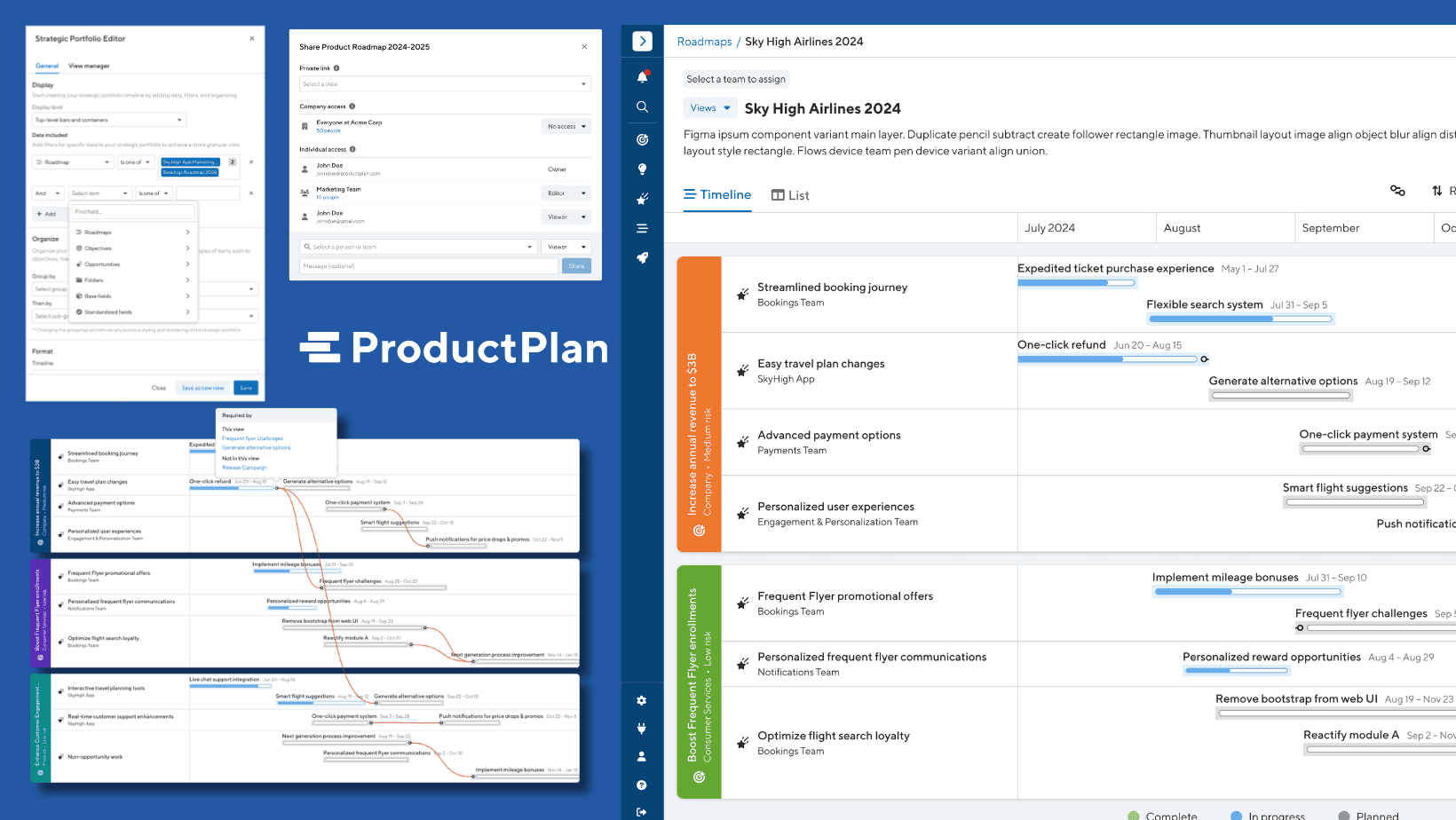

ProductPlan strategic portfolio visualizations
ProductPlan
Driving strategic alignment with 58% retention boost with portfolio visualizations
Enterprise customers were at risk of churning due to inflexible portfolio tools that couldn't demonstrate strategic value to stakeholders. This retention threat required a solution that balanced ambitious user needs with significant technical constraints.
My Role: As the product designer, I led user research across three countries while collaborating closely with engineering to navigate permission architecture limitations. My approach combined user validation with technical feasibility assessment, ensuring we delivered a solution that was both highly usable and realistic to implement.
Key Approach:
Cross-functional collaboration from research through implementation
Early technical constraint validation to avoid costly redesigns
Systematic measurement setup to track business impact
Result: The solution drove 58% retention improvement and secured $350k in enterprise renewals.
Timeline
Sep 2024 - Feb 2025
Role
Product Designer
Team
1x Product Designer
1x Product Manager
4x Full Stack Engineers
Impact
58% MoM retention
20% Decrease in time-to-first use
34% Increase in account adoption
$350k ARR secured in enterprise renewals
Constraints
Permission architecture constraints with the existing code base
Limited pivot capabilities based on data relationships
THE PROBLEM
Legacy portfolio tools threatening enterprise customer retention
Product teams struggled to align on strategic priorities, leading to fragmented roadmaps across multiple organizational structures and missed business goals. Every organization structures strategic planning differently - there's no one-size-fits-all solution.
This problem was discovered through:
Multiple customer complaints to customer success and sales
Feedback submissions on the platform
Continuous discovery interviews
Business Impact: Customer feedback indicated this was a primary factor in churn decisions, with several enterprise accounts expressing frustration during renewal conversations.
RESEARCH AND DISCOVERY
Validating the problem and technical feasibility
Every organization structures strategic planning differently - flexibility over rigid structure was essential. The different user types drive this flexibility and a need for a permissions structure.
Product Managers: Want to plan out their work and present to the company
Executives: Want a simple, clear overview presentation that they can potentially show to external stakeholders
Research approach
I conducted comprehensive user research with nine participants across the US, UK, and Australia, including product managers, project managers, and implementation managers. Working closely with our PM and engineering team, I designed interview protocols that would validate both user needs and technical constraints.
9 interviews across 3 countries with enterprise and SMB customers
Collaborative analysis with PM to align findings with business goals
Competitive analysis of 6 portfolio management tools
Audit of existing legacy portfolio features
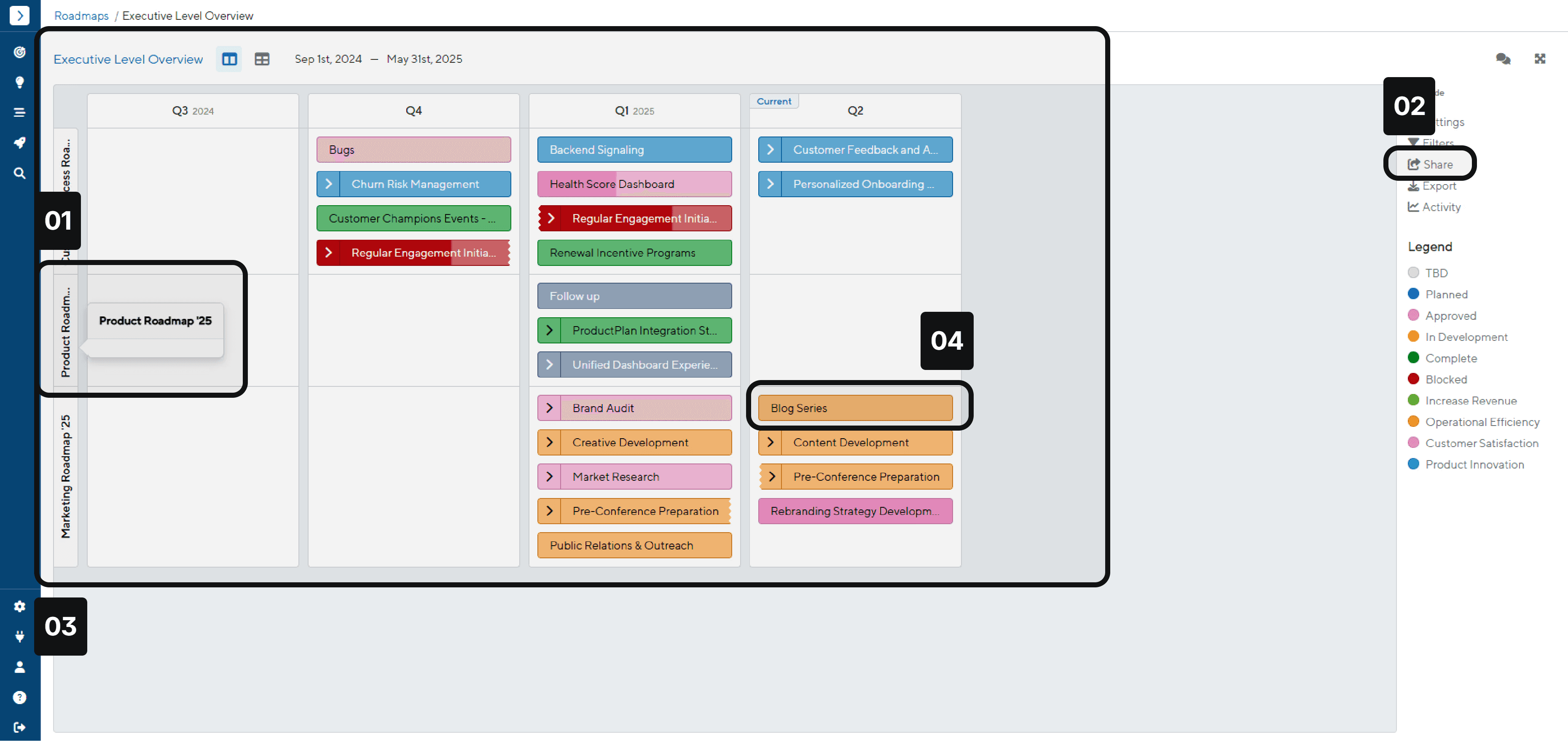
Legacy portfolios

01
Group data by more than just roadmaps
02
Share portfolios internally and externally
03
Clutter-free way to present portfolios
04
Rearrange elements for priorities and capacity
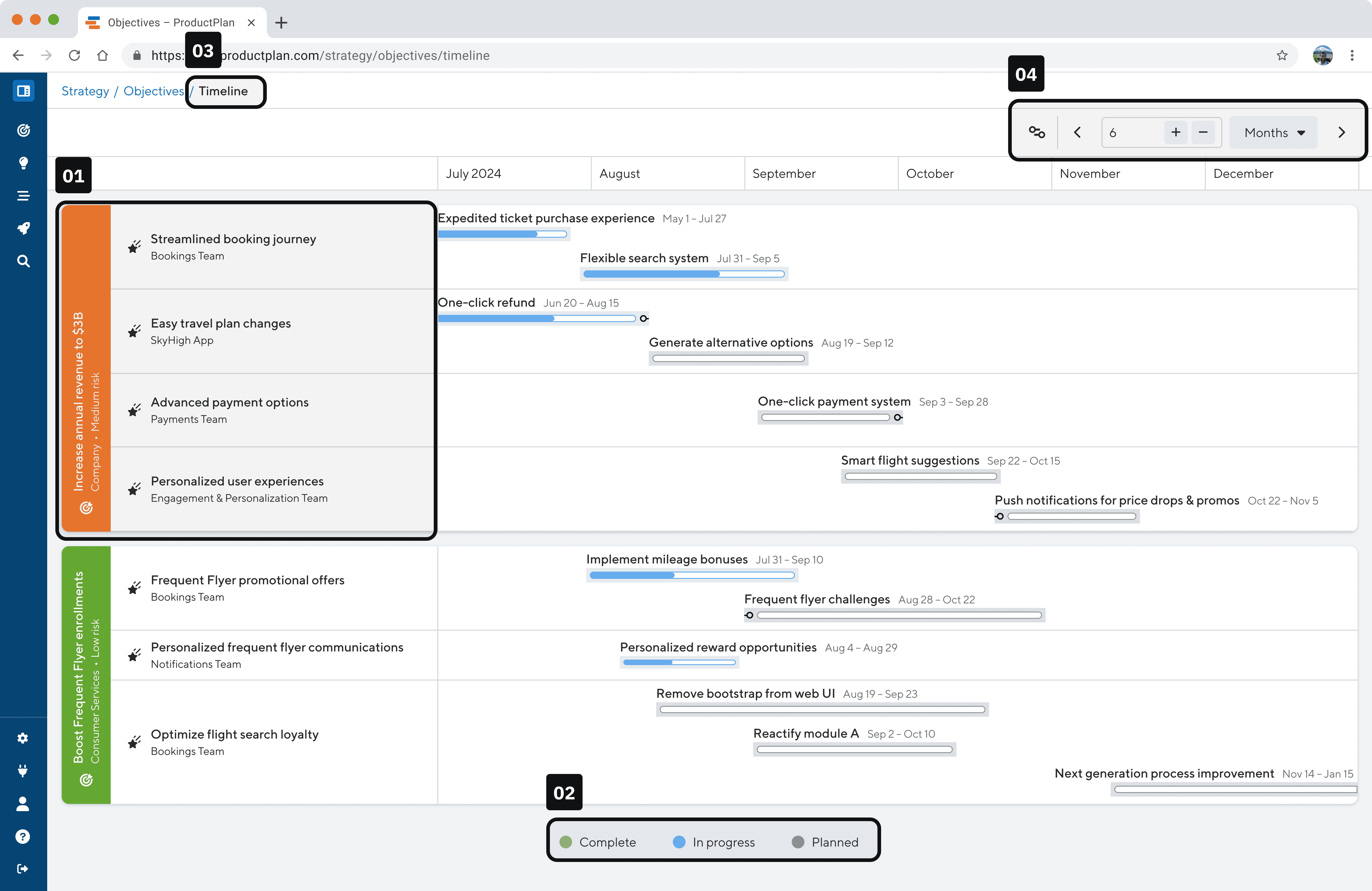
Early strategic portfolios

01
Move and hide any lane or sublane
02
Editable legend
03
Save the timeline and give a title
04
Pivotable data
Collaborative ideation
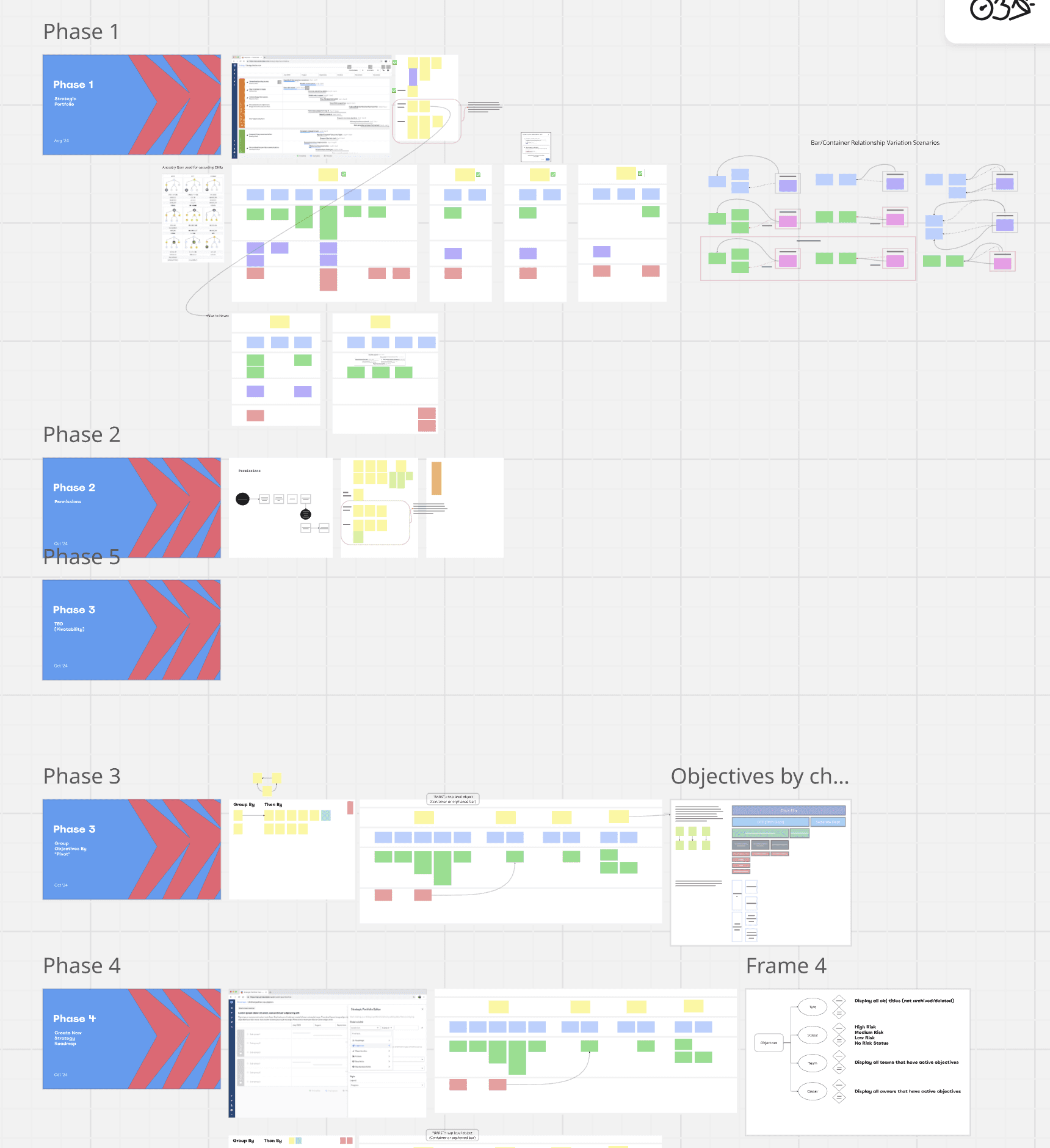
Working with the PM, I facilitated a prioritization session to align the team on scope before any design work began. The feature list was long and engineering capacity was fixed. Without a clear must-have versus nice-to-have distinction, we risked building the wrong things first.
I mapped each proposed feature against two axes: user impact from research and technical feasibility from engineering. That session produced the framework that shaped our phasing. Customizable grouping, distinct viewer and editor permissions, and export functionality shipped in the first release. Real-time presentation updates and private sharing links moved to a later phase.
It kept the team focused and prevented scope creep from delaying the features users needed most.
Core Features Identified:
Title & Description
Sharing Capabilities
Present Mode
Flexible Lane Management
Data Filtering & Pivoting

Technical constraints & solutions
Throughout the design process, I worked closely with engineering to understand constraints early. These weren't compromises - they were opportunities to create clearer, more intentional user interactions.
Challenge: Form validation issues on multiple fields within one tab
Solution: Break forms into multiple tabs for guided flow
Challenge: Changing groupings after creation would break data structure
Solution: Designed explicit 'save new view' pattern instead of auto-saving
Challenge: User permission system limitations
Solution: Designed within existing boundaries while maintaining functionality


DESIGN SOLUTION
Empowering users with better portfolio views
Progressive Disclosure: Organization options hidden until data is selected - reduces cognitive load
Multi-Tab Forms: Breaks complex configuration into manageable steps
Real-Time Preview: Shows immediate visual feedback as users make selections
Flexible Data Organization: Adapts to any organizational structure rather than forcing one approach
Explicit Save Actions: Clear control over when changes are saved vs. creating new views
The hardest call: showing less to communicate more
The first wireframes showed all configuration options at once. Groupings, filters, lane management, sharing settings, all in a single long form. It felt thorough. In testing, it paralyzed users.
The issue wasn't the options themselves. It was timing. Users couldn't make meaningful decisions about how to organize their data until they'd already selected what data to include. Presenting everything simultaneously forced choices before the context to make them existed.
I redesigned the flow around a simple principle: each step only unlocks once the previous one is complete. Select your data. Then organize it. Then set permissions and sharing. The form didn't get shorter. It got sequenced.
Engineering flagged the additional complexity. We ran a feasibility check against the existing architecture and confirmed it was buildable within the current sprint. The tradeoff was worth it. Users moved through configuration faster and with fewer errors, and the explicit save pattern we paired with it meant no one accidentally overwrote a view they'd spent time building.
Strategic portfolio creation flow

Select the display level and start adding data

Use nested filters to select data to be included

Organize the data groupings and set the format

Select the display level and start adding data

RETROSPECTIVE
Key learnings and business impact
This project reinforced the importance of early technical collaboration in the design process. By involving engineering from the research phase, we avoided costly design changes and delivered a solution that users loved and developers could confidently build.
What worked well
Cross-functional collaboration from day one prevented late-stage feasibility issues
Systematic user research across multiple regions provided comprehensive insights
Establishing measurement frameworks early enabled clear success validation
What I would have changed
If I did this again, I'd have recruited executives into research earlier. Our nine interviews were primarily with product managers — the people building portfolios. But executives were the ones presenting them to external stakeholders, and their mental model of what "clear" looks like was different. We heard from them after launch. That feedback shaped the next iteration. It should have shaped the first one.
Key takeaway
The biggest lesson was that understanding technical constraints doesn't limit creativity—it focuses it. Working within the existing permission architecture led to more innovative solutions than if we'd had unlimited technical flexibility.
Business impact
Using Pendo and Metabase data, to track whether we had strengthened ProductPlan's competitive position in enterprise strategic planning software
58%
month to month account retention
34%
Increase in account adoption
20%
Decrease in time to first conversion
Featured Case Studies

Bridging the Gap in Strategic Planning with ProductPlan
Driving strategic alignment with 54% month to month retention boost with portfolio visualizations

Curriculum Management for School and District Admins
Increasing Daily Active Usage by 15% through optimization of curriculum management